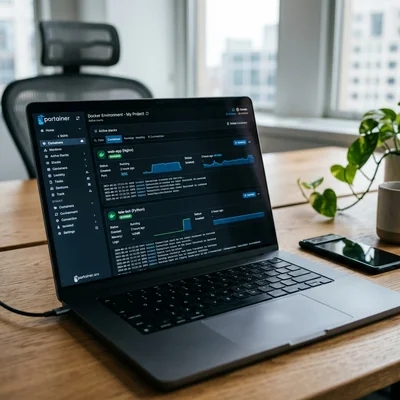
Docker is a way to package a Telegram bot, an API, a job queue, or a bundle of services into a container: the same code, dependencies, and environment on a developer laptop, on a VPS, and in the cloud. An ordinary business site does not need Docker by default - the normal setup is a VPS with nginx, PHP/Python, and a database without containers; most projects run fine that way. Containers make sense when you also run a bot, several services, frequent releases, or a team that needs identical deploys. Below - where Docker actually helps and where it is better not to add complexity.
- Container - an isolated process with the app and its dependencies; lighter than a full VM
- Image - a template for how to build and run; a container is a running instance of an image
- Ordinary site - VPS + web server + PHP/Python + DB without Docker; a working default, not an “outdated” approach
- For a bot - stable runtime, restarts, secrets kept apart from code; here Docker pays off more often
- Compose - one file for several services (bot + API + DB), not required for a simple site
- Not a silver bullet - if a site already runs stably on a VPS, containers add a layer without clear upside